













Glass Removal and Installation |
Page 1 |
Sometimes it is best to R & R (remove and replace) glass for a repair. One of the limitations of refinishing around glass openings is achieving a good masking of the weatherstripping without the telltale line of paint where the masking tape covers the weatherstrip. When doing a total restoration of an older car (such as a Ford Mustang), the only way to achieve a perfect paint job around the glass openings is to remove the glass.
|
| Glass Definitions:
|
First, lets clear up the words. The front glass is called the
windshield here in the USA (the British call it the windscreen).
The rear glass is not called the rear windshield. It is called the back
light. Then there is the door glass for windows that retract into the doors. Lastly, there is the quarter glass as found on 2-door coupes. Quarter glasses can either retract like door glass or open outwards at the rear by means of front hinges. They can also be stationary (like in a Volkswagen Beetle).
|
Two Ways To Mount Glass:
|
Other than mounting quarter glass with screws (such as in the Honda Civics and
Accords), there are two ways glass is usually mounted in the vehicle. Windshields, back lights and quarter glasses are mounted to the body shell to a mating flange where the inner and outer body panels are welded together. One way the glass is mounted is with rubber weatherstripping to hold the glass in place. |
| Weatherstripping sometimes comes with strips of metal trim which is inserted after the
glass and weatherstrip is installed. Sometimes these trim pieces actually wedge the glass
and weatherstrip to help hold them into place. The other way is where a water-tight adhesive is used to glue the glass in place. This adhesive takes the place of weatherstripping. Usually strips of plastic or metal trim overlap both the body panels and the glass. In this case the glass contributes to the overall structural integrity of the car. In most modern unibody cars this is the usual method of mounting glass. |
Windshield Knives:![]()
|
To remove glass that is held by adhesive, you need a windshield knife. Pneumatic
versions of these windshield cutters are available, along with assortments of blades. In reality, there is little chance of removing glass that is held with adhesive without breaking it. Usually you remove glass that is already broken, such as in collision repair. The knife is worked into place under the glass and it is drawn towards you, steadily rocking back and forth while pulling on the knife.
|
Windshield Wire Kits:
|
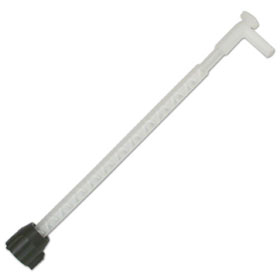
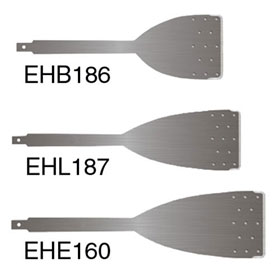
Another alternative to the knife is the use of windshield wire
along with a pair of grips. Steck Mfg. makes a wire holding device called the Steck
Windshield Removal Kit as well. Also handy is a windshield chisel and windshield scraper
(below).
|
|
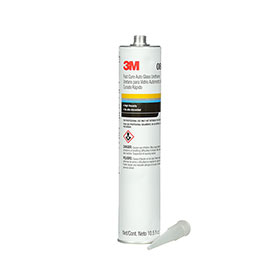
| Replacing Glass Using Adhesive | Once the body panels have been refinished, replacing glass held in place with adhesive is a straightforward process. First, fit the glass to the opening to make sure there is a perfect fit. If necessary, continue with sheet metal straightening before refinishing the panels until the glass fits perfectly. Obtain a caulking gun and a tube of windshield adhesive (such as one manufactured by 3M) obtainable at your local refinish supply house. Make sure that both the glass and the body panels have been thoroughly cleaned to remove all contaminants and old adhesive so a perfect water-tight seal is attained. Apply the adhesive to the mating flange on the body panel evenly so there is an unbroken bead all the way around the glass opening. Carefully place the glass onto the opening and press it down so the bead of adhesive spreads slightly. Make sure to allow room for the trim pieces. There are spacers designed for this purpose which can be obtained. Let the adhesive set for the recommended time. Then reinstall the trim pieces. |